
Luxury at home doesn’t always come from a massive kitchen renovation, expensive furniture, or a house filled with designer pieces. Sometimes, it is much simpler than that.
A beautifully finished home often feels special because of the details. The way the lighting works at night. The way curtains frame a window. The hardware on a cabinet. A well-placed piece of artwork. A clean entryway. Even the feeling of opening a drawer that closes smoothly can make an everyday space feel more thoughtful.
The best part is that many of these changes don’t require a major renovation or an enormous budget. They are about paying attention to how a home looks, feels, and functions.
Start With What You Already Have
Before buying anything new, take a good look around your home.
Clutter can quickly make even a beautiful space feel unfinished. Clearing unnecessary items from countertops, shelves, and entryways gives the things you actually love more room to stand out. Homes & Gardens recommends beginning with decluttering because a clean, organized space provides a better foundation for everything that follows.
This doesn’t mean your home needs to look empty.
A home should still have personality. Books, artwork, photographs, plants, and meaningful objects can make a space feel collected rather than staged. The goal is not to remove everything—it is to make sure everything that remains feels intentional.
Upgrade the Details You Touch Every Day
Some of the smallest changes can have a surprisingly noticeable effect.
Cabinet handles, drawer pulls, door hardware, light switches, and outlet covers are easy to overlook, but they contribute to the overall impression of a room. Homes & Gardens notes that these finishing touches can help create a more cohesive and polished interior.
Even something as simple as replacing dated cabinet hardware can give a kitchen a completely different personality.
And luxury isn’t only visual.
Small functional upgrades can make a home feel better to live in, too. Recent home-improvement discussions highlighted features such as soft-close cabinets, modern screen doors, motion-activated lighting, and smart blinds as examples of relatively small changes that can make everyday life feel more convenient.
That is an important part of what makes a home feel high-end: it works well.
Let Lighting Set the Mood
Lighting can completely change how a room is experienced.
A room with one harsh overhead light can feel very different from the same room with layered lighting from a pendant, table lamp, floor lamp, or subtle accent lighting.
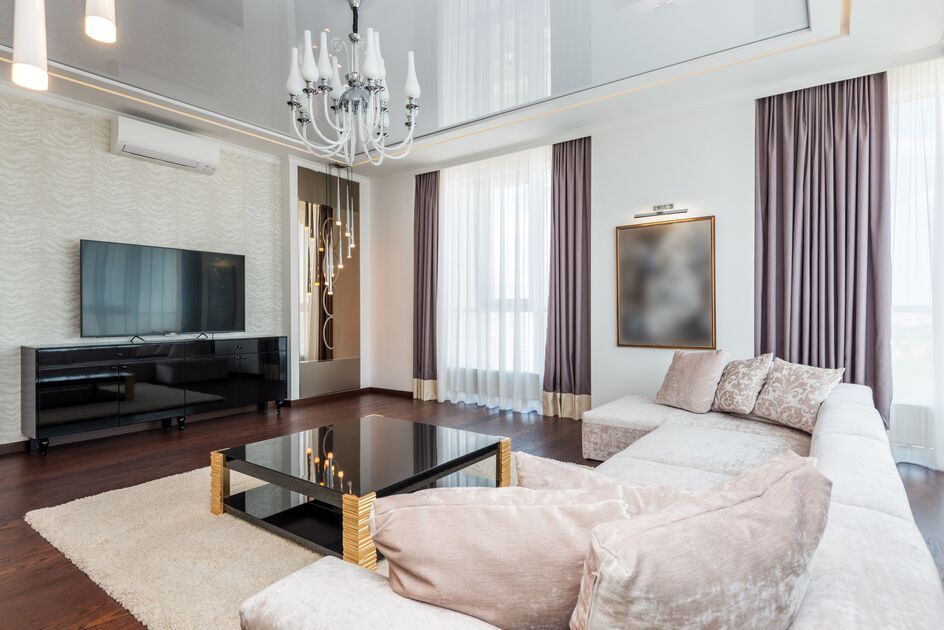
Statement lighting can also become part of the room’s design. Homes & Gardens points to chandeliers and bold pendant lights as ways to add elegance while drawing attention upward and emphasizing the proportions of a space.
But you don’t necessarily need a dramatic chandelier.
Sometimes the simplest improvement is choosing warmer, softer lighting or adding another source of light where you actually spend time.
The goal is to make the room feel inviting at every hour of the day.
Give Your Windows More Presence
Windows have a bigger influence on a room than many homeowners realize.
Curtains that are hung too low or barely extend beyond the window can make a room feel smaller. Raising curtains closer to the ceiling can create the impression of taller windows and give the room a more finished appearance.
It’s a relatively simple change, but it can alter the entire visual balance of a space.
The same principle applies throughout the home: sometimes the room doesn’t need more things. It simply needs better proportions.
Mix Texture, Character, and History
A room filled with perfectly matching furniture can sometimes feel more like a showroom than a home.
A more sophisticated approach is to mix textures, materials, and pieces with different personalities. Homes & Gardens recommends combining older and newer furnishings and incorporating pieces with character rather than relying on a completely matching furniture set.
Think wood alongside metal. Soft textiles alongside harder surfaces. A modern sofa paired with a vintage-looking rug. Contemporary artwork displayed alongside something sentimental.
These contrasts create depth.
And depth is one of the things that can make a room feel thoughtfully designed rather than simply decorated.
Don’t Underestimate the Power of Art and Books
Empty walls can make a room feel unfinished, while thoughtfully chosen artwork can give it personality.
The important word is thoughtfully. Your home doesn’t need to resemble a gallery, and every wall doesn’t need to be filled.
Choose pieces that you genuinely enjoy and that work with the scale of the room.
Books can have a similar effect. A well-used bookshelf, a stack of favorite books on a coffee table, or a reading corner can make a home feel personal and lived-in rather than overly staged.
Luxury doesn’t have to mean showing how much you spent.
Sometimes it means showing that you have a life you enjoy living in the space.
Make Practical Spaces Beautiful Too
Kitchens, bathrooms, laundry rooms, and entryways are often treated as purely functional areas.
But these spaces can have just as much personality as a living room.
A small rug in a kitchen. Artwork in a bathroom. Attractive containers for everyday items. A well-organized entryway. Better lighting in a laundry room.
Homes & Gardens specifically recommends bringing decorative elements into practical spaces rather than limiting design attention to the rooms traditionally considered entertaining areas.
It is a simple philosophy: the spaces you use every day deserve to feel good, too.
Make Your Home Feel Effortless
Perhaps the most luxurious quality a home can have is ease.
Things are where they should be. The entryway isn’t overwhelmed with shoes and bags. Cords aren’t scattered across the room. Cabinets open and close smoothly. Lighting works for different activities. Storage keeps everyday clutter under control.
These details may not be dramatic enough to appear in a before-and-after renovation show, but they can make a significant difference in everyday life.
Homes & Gardens emphasizes storage and concealed visual clutter as part of creating a more polished environment, while BuzzFeed’s collection of homeowner suggestions similarly shows how small functional improvements can make a home feel more comfortable and refined.
Luxury Doesn’t Have to Look Expensive
There is a difference between a home that is expensive and a home that feels expensive.
The first may depend on the price of the finishes, furniture, or property itself.
The second can come from care.
It can come from a beautifully arranged room, a welcoming entrance, comfortable furniture, good lighting, organized storage, interesting textures, and the little details that make everyday routines easier.
That is what makes these upgrades so appealing. You don’t have to change everything at once.
Start with one room. Replace the hardware you’ve never liked. Improve the lighting. Hang the curtains properly. Clear the clutter. Add a piece of art. Bring in a plant or fresh flowers. Make the space work a little better for the way you actually live.
Because sometimes, creating a more luxurious home isn’t about adding more.
It is about making the things you already have feel more intentional.
References
Homes & Gardens. (2023, July 31). What makes a home look expensive? 15 tricks designers use, indoors and out.
Good Housekeeping. (2026). How to make your home look expensive, according to designers.
Liscomb, M. (2026, August 2). “It feels like a fancy hotel”: People are sharing the small thing that made their home feel way more put together. BuzzFeed.