An outdoor space can be much more than a backyard, patio, or garden. With thoughtful design, it can become an extension of the home—a place to relax, entertain, reconnect with nature, and enjoy everyday moments. Whether it is a spacious backyard or a small balcony, creating an inviting outdoor environment is about combining comfort, functionality, and personal style.
The idea of outdoor living has evolved beyond simply placing a few chairs outside. Homeowners are increasingly treating their outdoor areas as additional living spaces, designing them with the same attention to detail as their indoor rooms. From comfortable seating and natural materials to soft lighting and greenery, every element can contribute to an atmosphere that encourages people to slow down and enjoy their surroundings.
1. Make the Outdoors an Extension of Your Home
One of the best ways to create a beautiful outdoor living area is to make it feel connected to the home’s interior. Instead of treating the patio or garden as a separate space, homeowners can carry familiar design elements outdoors. Repeating colors, materials, and textures helps establish a natural transition between indoor and outdoor living.
For example, wooden furniture, neutral-colored cushions, stone finishes, and complementary decorative accents can create a consistent design throughout the property. Natural materials such as timber and stone also add warmth and character without making the area feel overly decorated.
According to Romeo (2026), visual and material continuity helps outdoor spaces feel like a natural continuation of the home’s interior. This approach creates a more cohesive environment while allowing homeowners to enjoy the benefits of both indoor and outdoor living.
2. Embrace Natural Materials and Textures
Natural materials can make an outdoor area feel welcoming, peaceful, and timeless. Stone, wood, travertine, and other earthy finishes introduce subtle variations in texture while complementing the surrounding landscape.
Travertine tiles, for instance, can provide a warm foundation for patios and garden seating areas. Stone wall cladding can also transform an ordinary exterior wall into an attractive architectural feature. Pairing these finishes with wooden furniture and greenery creates a balanced look that feels connected to nature.
The key is to avoid combining too many competing materials. A thoughtful selection of finishes in complementary shades of beige, cream, brown, and soft gray can make the space feel sophisticated without appearing overly designed (How to Create a Slow-Living Feel in an Outdoor Space, 2026).
3. Create Comfortable Outdoor Living Areas
An outdoor space should be designed for everyday comfort, not just appearance. Think of it as another living room where family members and guests can gather, enjoy conversations, read, or simply unwind.
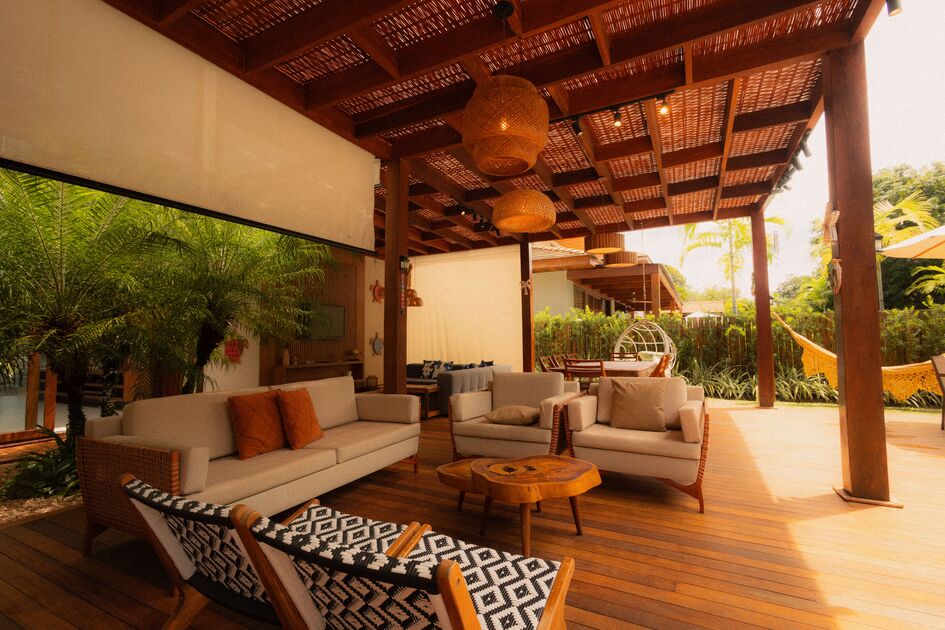
Comfortable lounge chairs, outdoor sofas, coffee tables, and weather-resistant cushions can make a patio feel just as inviting as an indoor sitting area. An outdoor rug can help visually define the seating arrangement, while a small side table provides a convenient place for drinks, books, or decorative accessories.
Cristina Villalón (n.d.) recommends treating outdoor areas like interior living rooms by incorporating comfortable furniture, rugs, pillows, and lighting. Even a small balcony can become a relaxing retreat with carefully selected furniture and a practical layout.
4. Bring Nature Closer with Plants and Greenery
Plants are among the simplest ways to make an outdoor area feel more alive. They introduce natural colors, soften architectural features, and create a refreshing atmosphere.
Homeowners can incorporate potted plants, flowering shrubs, climbing greenery, or small trees depending on the available space. Larger plants can establish focal points, while smaller arrangements can decorate corners, walkways, and seating areas.
Instead of filling every available space with plants, consider arranging them strategically. A few well-positioned planters can create a more balanced appearance while allowing the existing architecture to remain visible.
Greenery can also help soften hard surfaces such as stone flooring and exterior walls, creating a more natural relationship between the built environment and the surrounding landscape (Romeo, 2026).
5. Design a Quiet Corner for Slow Living
Not every outdoor space needs to accommodate large gatherings or elaborate entertainment. Sometimes, the most meaningful addition is a small corner dedicated to relaxation.
A comfortable chair, a simple bench, or a hammock placed near greenery can become a personal retreat. This area can be used for morning coffee, afternoon reading, meditation, or simply enjoying the fresh air.
The concept of slow living encourages homeowners to create spaces that support a more intentional and relaxed lifestyle. Rather than focusing entirely on decorative features, the goal is to create an environment where people can pause and appreciate ordinary moments.
As highlighted by The Philippine Times (2026), comfortable seating, natural textures, and thoughtful landscaping can help transform an outdoor area into a peaceful place to spend time. A quiet corner does not need expensive furniture or extensive renovations to become a meaningful part of the home.
6. Incorporate Soft and Warm Outdoor Lighting
Lighting plays an important role in making an outdoor area functional and inviting, especially after sunset. The right lighting can highlight architectural details, illuminate pathways, and establish a comfortable atmosphere for evening gatherings.
Wall sconces, lanterns, string lights, and carefully positioned landscape lighting are practical options. Homeowners can also incorporate candles or decorative lamps to create a softer ambiance.
Rather than relying on one bright light source, combining different levels of illumination can make the area feel more intimate and visually appealing. Warm lighting is particularly effective for creating a welcoming atmosphere.
Romeo (2026) emphasizes that layered lighting helps define outdoor spaces, adding depth and atmosphere even without traditional walls or ceilings.
7. Add Water Features for a Relaxing Atmosphere
Water features can introduce another dimension to outdoor design. A small fountain, decorative water installation, or compact pond can become a beautiful focal point while creating a soothing environment.
The gentle sound of flowing water can help mask surrounding noise and contribute to a more peaceful atmosphere. Even homeowners with limited space can consider tabletop fountains or compact water features that complement their existing decorations.
Villalón (n.d.) also highlights water features as an option for creating a more enjoyable outdoor retreat. They can add visual interest without requiring a large swimming pool or extensive landscaping.
8. Make the Most of Small Outdoor Spaces
A beautiful outdoor retreat does not depend on having a large backyard. Small patios, balconies, and narrow garden areas can still offer plenty of opportunities for creative design.
The secret is to prioritize functionality and choose furniture that suits the available dimensions. Folding chairs, compact tables, vertical planters, and multi-purpose furniture can help maximize limited space.
Homeowners can also use outdoor curtains or umbrellas to introduce privacy and protection from direct sunlight. A small arrangement of plants and a comfortable seating area may be all that is needed to create a welcoming environment.
As Villalón (n.d.) explains, even a modest balcony can serve several purposes when thoughtfully organized. It can become a reading corner, a small garden, a dining spot, or a place to relax after a long day.
9. Design for Everyday Living, Not Just Special Occasions
An attractive outdoor area should be practical enough to enjoy regularly. Before selecting furniture or decorative elements, consider how the household intends to use the space.
Some families may prefer an outdoor dining area for weekend meals, while others may want a comfortable lounge for entertaining guests. A garden might also include a designated space for children to play or an area for growing herbs and vegetables.
Considering how the space will function throughout the day can help guide decisions about seating, shade, furniture placement, and lighting. A successful outdoor design should support the household’s routines rather than simply follow current decorating trends.
Bringing the Comfort of Home Beyond Its Walls
A thoughtfully designed outdoor space can add another layer of comfort, beauty, and functionality to a home. It provides opportunities to enjoy fresh air, spend quality time with loved ones, and appreciate the natural surroundings without leaving the comfort of the property.
Whether homeowners choose to renovate a spacious backyard or refresh a modest balcony, the most important consideration is creating an environment that reflects their lifestyle. Natural materials, comfortable furniture, greenery, and thoughtful lighting can make even the simplest outdoor area feel special.
Ultimately, outdoor living is not about how much space a home has or how much money is spent on decorations. It is about creating a place where people feel comfortable enough to slow down, enjoy the moment, and make lasting memories.
References (APA 7th Edition)
Álvarez-Díaz & Villalón. (n.d.). 10 ways to make your outdoor space more enjoyable. https://www.alvarezdiazvillalon.com/blog/10-ways-to-make-your-outdoor-space-more-enjoyable
Contributing Writer. (2026, November 5). How to create a slow-living feel in an outdoor space. The Philippine Times. https://philtimes.com.au/how-to-create-a-slow-living-feel-in-an-outdoor-space/
Romeo, L. (2026, April 23). The outdoor room: Designing spaces that live beyond walls. Maison Vogue. https://maisonvogue.com/blogs/maison-vogues-blog/the-outdoor-room-designing-spaces-that-live-beyond-walls