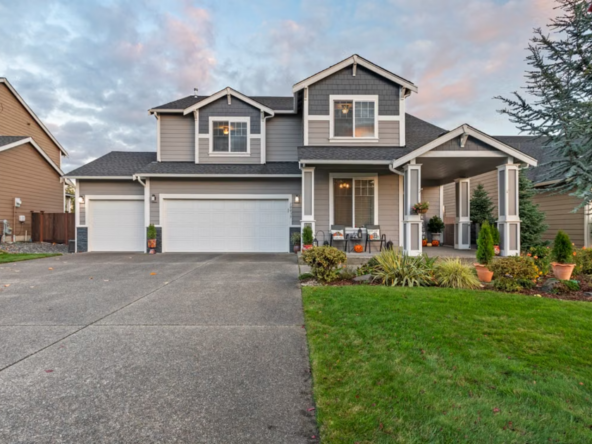
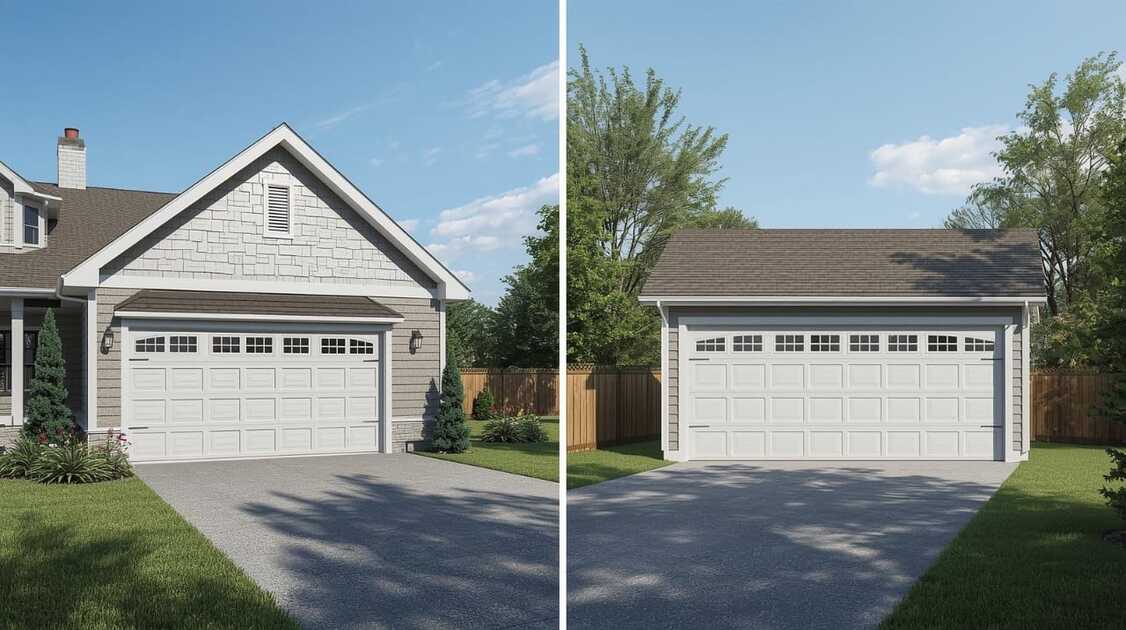
If you’re weighing whether to go with an attached or detached garage, it ultimately depends on your lifestyle, budget, and goals for your property. Here’s a breakdown of the core differences, benefits, and considerations to help you make the best choice.
What’s the Difference?
- Attached Garage: Connected directly to your home—sharing walls, roofline, and utilities. You can access it through an interior door.
- Detached Garage: A standalone structure on the property, separate from the house. Access requires going outdoors.
Pros & Cons at a Glance
Attached Garage
Advantages:
- Convenience: Direct indoor access—ideal in bad weather.
- Cost‑Effective: Easier utility integration and permit handling often lower building costs.
- Expanded Living Space: Adds to the home’s total square footage; can accommodate storage or utilities.
Disadvantages:
- Noise & Odor Transfer: Garage sounds or fumes may more easily penetrate the home.
- Security Risks: A connected structure gives intruders another access point.
- Design Constraints: May negatively impact your home’s facade and future expansion.
Detached Garage
Advantages:
- Privacy & Quiet: Insulates the home from noise or workshop activities.
- Design Flexibility: Freely customizable in size, layout, and placement—great for creative uses.
- Safety: Keeps flammable materials or fumes separate from living spaces.
Disadvantages:
- Less Convenient: Requires walking outdoors to access—less ideal during inclement weather.
- Higher Cost: Needs separate foundation, utilities, and potentially increased permits. Prefab options can reduce cost.
- Heating/Cooling Expense: Especially if converted into living or working space.
Additional Considerations
- Resale Value: Both types can boost property value depending on market demand, size, and build quality.
- Insurance Impact: Adding any garage may raise your home insurance premiums; however, a detached garage could be considered an outbuilding and carry slightly lower insurance liability.
- Building Codes & Permits: Regulations vary. Attached garages might have simpler approvals; detached ones might need more due to separate utility connections.
- Intended Use: Workshops, offices, guest accommodations? Detached offers more flexibility. For everyday parking and storage, attached may suffice.
Decision-Making Summary
| Priority | Attached Garage | Detached Garage |
|---|---|---|
| Convenience & Weather Shelter | Ideal—indoor access | Requires outdoor access |
| Construction Costs | Usually lower | Typically higher |
| Design Flexibility | Limited | Highly customizable |
| Noise & Safety Management | Potential issue | Better insulation |
| Resale & Insurance Effects | Adds value & may alter premiums | Flexible impact, may lower risk |
| Usage Versatility | Best for parking/storage | Great for multi-function use |
Final Thoughts
Choosing between attached and detached garages comes down to your daily needs, budget, and long-term vision for your home. If convenience and integration matter most, an attached garage might be your best bet. But if flexibility, privacy, and minimizing indoor disruption are top priorities, a detached garage could be more suitable—especially if you’re interested in repurposing it in the future.
References (APA Format)
Archival Designs Team. (2025, July 17). Attached vs Detached Garage: What is The Best Option for You. Archival Designs House Plans. Retrieved from Archival Designs website Archival Designs House Plans
Timberline Barns. (n.d.). Attached vs Detached Garage: All You Need to Know. Timberline Barns. Retrieved from Timberline Barns website Timberline Barns
Garaga. (2022, June 28). Attached vs. Detached Garage: What’s Right for You? Garaga. Retrieved from Garaga website Garaga